
10 Rhodes Street, Springvale VIC
Paving In Springvale
Paving Experts
Landscaping, retaining walls, decking, paving and concreting across Springvale and Melbourne's south-east - measured on site, quoted in writing, built by one team.
MG Landscaping lays paving across Springvale and Melbourne's south-east - patios, alfresco areas, paths, pool surrounds and driveways. Whether pavers stay flat for twenty years or start rocking and sinking after two winters comes down almost entirely to what is underneath them. We excavate to depth, compact at least 100 millimetres of class 3 crushed rock, and lay onto either a screeded bedding sand layer or a mortar bed depending on the application, with a concrete edge restraint haunched around the perimeter so the field cannot creep outward. Falls are set at around 1 in 100 away from the house so water sheds instead of pooling against the slab. We lay concrete pavers, clay pavers, bluestone, travertine and porcelain, and permeable paving where stormwater has to soak away on site. Joints are filled with the right sand for the job so weeds and ants have nothing to work with. Call 0423 422 866.
GET A FREE QUOTE
MG Landscaping
The Paving Types We Lay
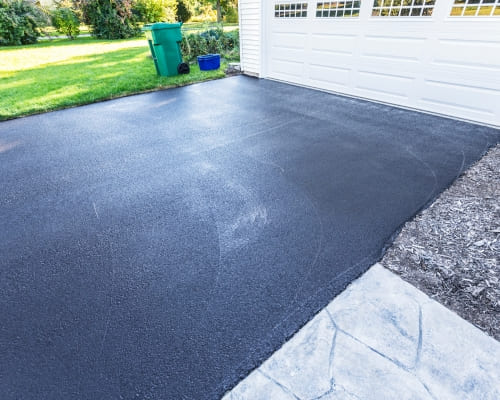
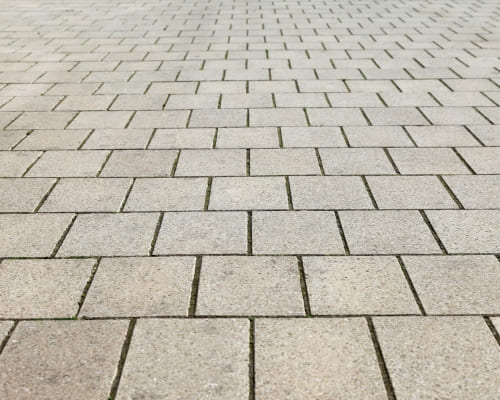
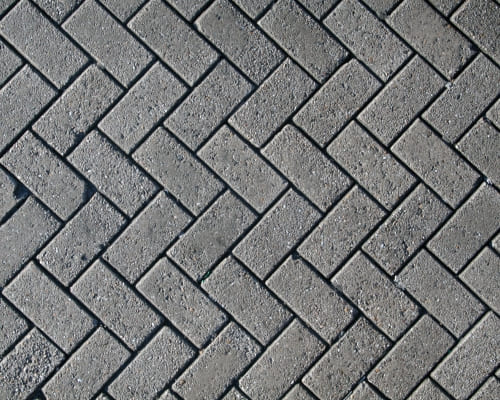
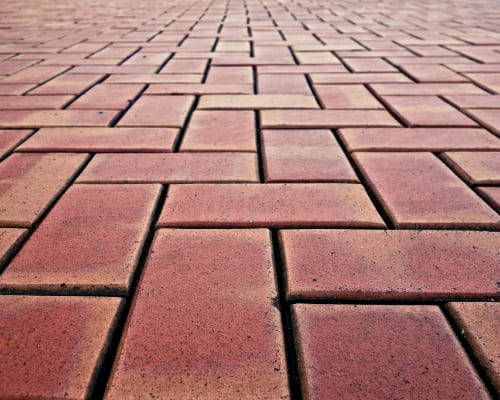
Concrete pavers are the most common choice and the best value, available in a huge range of formats from small cobbles through to large format 400 by 400 and 600 by 300 slabs, and modern colour-through pavers hold their appearance far better than the older painted surface products. Clay pavers cost more and are worth it where you want a colour that will not fade, because the colour is fired through the body and does not shift with UV. Bluestone is the classic Melbourne look, available sawn, honed or flamed, and it suits period homes around Ringwood and the older Springvale streets particularly well. Travertine and porcelain are the premium end, with porcelain in particular being extremely hard-wearing, stain resistant and low maintenance, which is why it dominates around pools. Permeable paving is worth raising on tight blocks where councils increasingly want stormwater managed on site rather than dumped into the street system. Driveway paving is a different specification to patio paving - thicker pavers and a deeper base - and we will not lay a patio-grade paver where a car will be parked.
MG Landscaping
How Pavers Are Laid So They Stay Flat
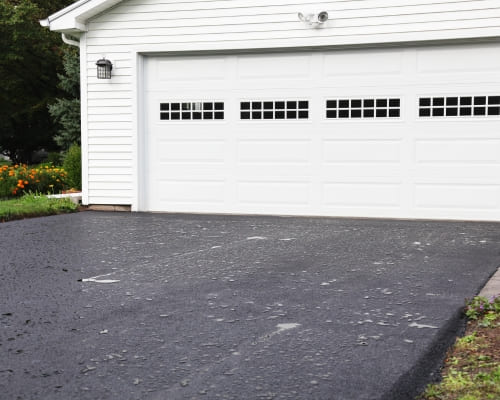
The base does the work. We excavate to depth, then compact a minimum 100 millimetre layer of class 3 crushed rock for patios and paths and 150 millimetres or more where vehicles will drive on it, compacted in layers with a plate compactor rather than in one lift. On top goes either 25 to 30 millimetres of screeded bedding sand for a flexible sand-set installation, or a 30 to 40 millimetre mortar bed over a concrete slab for a rigid installation, which is what we use for bluestone, porcelain and anything around a pool. Screed rails give a consistent bedding depth, and falls of about 1 in 100 are set away from the house so water runs off rather than sitting against the brickwork. The perimeter gets a concrete edge restraint haunched behind it, because without an edge the outer pavers gradually creep and the joints open across the whole field. Joints are kept tight at 2 to 3 millimetres, and once the field is down the pavers are compacted with a plate compactor over a rubber mat so nothing chips. Jointing sand is then swept in, and we generally use a polymeric jointing sand because it locks the joints against weeds, ants and hose washout far better than plain kiln-dried sand.
MG Landscaping
Why Choose MG Landscaping for Paving
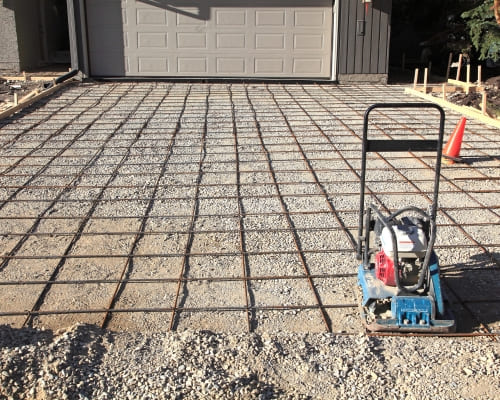
Sunken, rocking pavers and weed-filled joints are base and edge failures, not paver failures, and they are entirely avoidable. We quote the excavation, crushed rock depth, bedding layer and edge restraint as visible line items so you can see what a cheaper quote is skipping. On the sandy soils through Carrum Downs, Skye, Sandhurst and Aspendale Gardens, edge restraint and compaction matter even more than on clay, because sand moves under load if there is nothing holding the field together. Because MG Landscaping builds the whole yard, the paving level is set against the finished deck, lawn and concrete levels from the outset, so you do not end up with a step where you wanted a flush transition. We also handle the drainage that paving affects, including agi lines and stormwater connection points, rather than paving over a problem. Call 0423 422 866 for a measured square metre price.
MG Landscaping
What Paving Costs Per Square Metre
Paving is quoted per square metre supplied and laid, including base preparation and edge restraint. Concrete pavers average $80 to $130 per square metre, clay pavers $110 to $160, bluestone $150 to $220, and porcelain or travertine $180 to $260 depending on the format and the thickness. A typical 40 square metre alfresco patio therefore averages $4,000 to $7,000 in concrete pavers, and $6,000 to $9,000 in bluestone. A 15 square metre path averages $1,400 to $2,400. What moves those numbers is base depth, the amount of excavation and spoil removal, whether the installation is sand-set or laid on a concrete slab, and cutting - a curved or angled design with a lot of cuts costs more in labour than a simple rectangle. Removing an existing surface adds to it, and laying over an existing sound concrete slab can reduce it, because the slab does the base's job. Every job is unique, so these are averages rather than quotes and you get a written fixed figure before any work starts.
MG Landscaping
Paving, Poured Concrete or Decking?
Paving costs more per square metre than plain poured concrete and less than hardwood decking, and each has a case. Paving's real advantage is repairability - if a service has to be dug up or one paver stains, you lift that section and relay it, which you cannot do with a slab. It also gives far more design freedom in colour, format and pattern, and it handles ground movement better because a flexible sand-set field can flex where a slab cracks. Concrete is cheaper, faster and better for large driveways, and there are no joints to weed. Decking is the answer where the ground falls away and building a level surface would mean substantial fill or retaining, since a deck can simply be framed out over the slope. Our steer is concrete for driveways and large utility areas, paving for patios, paths and pool surrounds, and decking where there is a level change to bridge or where the outdoor area sits at the same height as the house floor.
Related Concreting Services
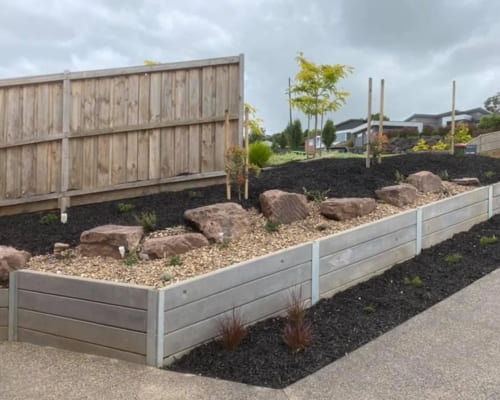
Sleeper, concrete and block retaining walls built for the reactive clay and sloping blocks across Melbourne's south-east. Proper footings, drainage behind the wall, and permit and engineering sorted before we start rather than discovered halfway through.
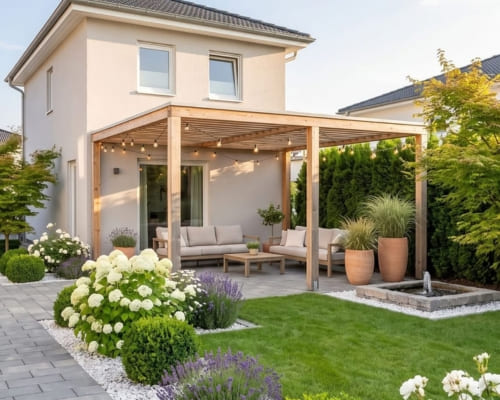
Full outdoor builds across Springvale and Melbourne's south-east - levels, drainage, retaining, hard surfaces, turf and planting handled by one team. Measured on site, quoted in writing, with a start date you can plan around.
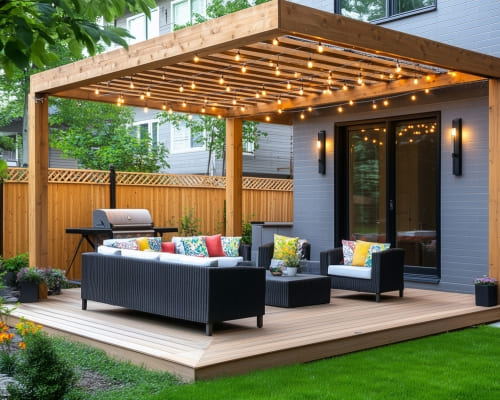
Timber and composite decks built on properly footed frames across Springvale and south-east Melbourne. Merbau, spotted gum, blackbutt and composite boards, with permits, stairs, balustrade and privacy screening all handled as part of the one build.
TESTIMONIALS
What Our Paving Customers Say About Us
The Process
3 Step Process For Your Paving Needs

Site Visit
We come out, measure the space, check the levels and drainage, and talk through what you actually want the yard to do.

Fixed Quote
You get a written quote listing materials, finishes and a start date. Nothing changes without your say-so, and there are no surprise extras.

We Build
Our team prepares the site properly, builds it, then cleans up and walks you through the finished work before we leave.
Paving In Springvale
FREQUENTLY ASKED QUESTIONS
Everything you need to know about our Paving In Springvale
How much do pavers cost to lay?
Supplied and laid with base preparation included, concrete pavers average $80 to $130 per square metre, clay $110 to $160, bluestone $150 to $220, and porcelain or travertine $180 to $260. A 40 square metre patio in concrete pavers therefore averages $4,000 to $7,000. Labour-only rates are sometimes quoted around $45 to $70 per square metre if you supply the pavers yourself. The variables that matter most are base depth, spoil removal, whether it is sand-set or laid on a slab, and how many cuts the design requires. Every job is unique, so your written quote follows a site measure.
Is it best to lay pavers on concrete or sand?
It depends on the paver and the use. Sand-set over compacted crushed rock is the standard flexible method and it suits concrete and clay pavers, driveways and large areas, because it tolerates minor ground movement and individual pavers can be lifted and relaid. A mortar bed over a concrete slab is the rigid method and it is what we use for bluestone, porcelain, travertine and anything around a pool, where a dead-flat, fully bonded result matters. Rigid installations cost more because you are paying for a slab as well as the paving, but they will not settle.
How do you prepare the ground for pavers?
Excavate to depth, then compact a minimum 100 millimetres of class 3 crushed rock for a patio or path, or 150 millimetres and up where vehicles will drive on it, compacted in layers rather than one lift. Then screed 25 to 30 millimetres of bedding sand to a consistent depth using screed rails, with falls of about 1 in 100 away from the house. A concrete edge restraint is haunched around the perimeter before or as the field goes down. Skipping the edge restraint is the single most common shortcut and it is why so many paved areas spread and open up at the joints.
What is the cheapest form of paving?
Standard concrete pavers in a simple rectangular layout are the cheapest properly laid option, averaging $80 to $130 per square metre supplied and laid. Below that, poured concrete with a broom finish at an average of $85 to $120 per square metre is comparable and often cheaper on large areas because there are no individual units to lay. Loose materials such as crushed rock or decomposed granite are cheaper again but they migrate, need topping up and are not really a paved surface. The cheapest genuine saving is in design rather than material: a simple rectangle with minimal cutting costs noticeably less to lay than a curved layout in the same paver. Every job is unique, so we confirm the figure in writing after measuring.
Why do pavers sink, lift or grow weeds?
Sinking is nearly always inadequate base compaction or too little crushed rock under the bedding sand, so the field consolidates under load over the first couple of winters. Spreading and opening joints mean there was no proper edge restraint holding the field in. Weeds and ants in the joints come from plain sand joints washing out, which is why we use a polymeric jointing sand that binds. Water pooling on the surface means the falls were not set, and on clay soils that water then softens the base and accelerates everything else. All four are fixable at the base stage and expensive to fix afterwards.
Can you pave over an existing concrete slab?
Yes, provided the slab is structurally sound, is not badly cracked or moving, and the extra height does not create a problem at doors, steps or the damp course. Laying over a sound slab is usually cheaper because the slab replaces the crushed rock base, and we would generally use a mortar bed rather than sand in that situation. Where the slab is cracked, drummy or holding water, overlaying it just transfers the problem to the new surface and it is better to break it out. We will tell you honestly which situation you are in after looking at it.
Request A Free Paving Quote
GET A FREE QUOTE

BUSINESS
SERVICES
SERVICE AREAS
OPERATING HOURS
Sun: 7:00am - 9:00pm
Mon: 7:00am - 9:00pm
Tue: 7:00am - 9:00pm
Wed: 7:00am - 9:00pm
Thu: 7:00am - 9:00pm
Fri: 7:00am - 9:00pm
Sat: 7:00am - 9:00pm