
10 Rhodes Street, Springvale VIC
Decking In Springvale
Decking Experts
Landscaping, retaining walls, decking, paving and concreting across Springvale and Melbourne's south-east - measured on site, quoted in writing, built by one team.
MG Landscaping builds timber and composite decks across Springvale and Melbourne's south-east, from low-level platforms off a back door to elevated decks with stairs, balustrade and privacy screening. A deck is a framed structure and the frame is what determines whether it feels solid in ten years: concrete stump footings at the right depth, H4 treated bearers and joists sized and spaced to AS 1684, joists at 450 millimetre centres for standard 19 millimetre boards, and stainless or class 3 fixings so the heads do not bleed rust down the boards. We build in merbau, spotted gum, blackbutt, treated pine and composite, and we will explain honestly what each one asks of you afterwards. A building permit is generally required once the deck floor sits more than 800 millimetres above ground, and a balustrade becomes mandatory at one metre. Call 0423 422 866 for a per-square-metre price.
GET A FREE QUOTE
MG Landscaping
The Decking Materials We Build In
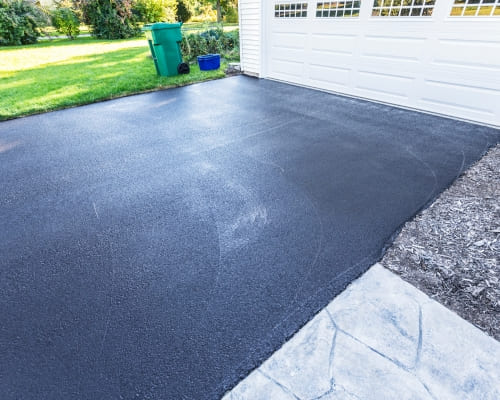
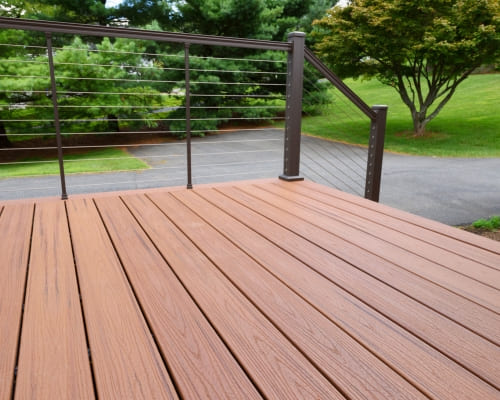
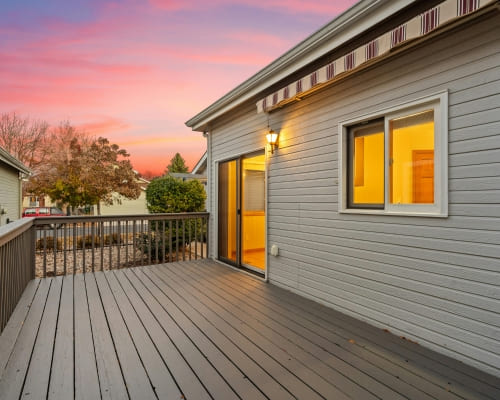
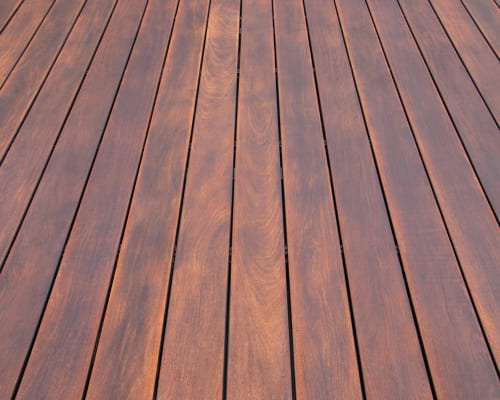
Merbau is the most common hardwood deck in Melbourne for good reason: it is hard, stable, resistant to insects and rot, and it is the best value hardwood on the market. Its one quirk is tannin bleed, where the first few rains wash a red-brown stain onto anything below the deck, which is why we pre-oil boards where the deck sits over paving or concrete. Spotted gum and blackbutt are the premium Australian hardwoods, harder again and with more character in the grain, and blackbutt carries a bushfire resistance rating that matters on the ranges edge around Ferntree Gully and Lysterfield. Treated pine is the budget option and it is genuinely fine for a low platform or a service area, though it is softer, marks more easily and needs painting or staining rather than oiling. Composite boards, capped or uncapped, cost more upfront and then need no oiling at all, just a wash, which makes them popular for pool surrounds and for anyone who does not want an annual maintenance job. We build low-level platforms, elevated decks with stairs and balustrade, and decks integrated with pergolas and screening.
MG Landscaping
How a Deck Is Framed So It Stays Solid
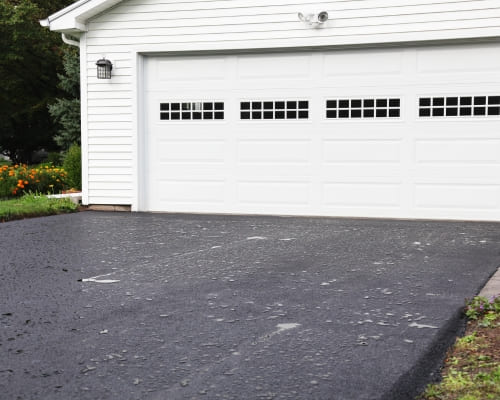
The frame is the deck. Footings go in first as concrete stump holes, sized and dug to depth for the soil and the load rather than to a standard number, which matters on the reactive clay across Knox and Casey where a shallow footing will lift and drop with the seasons. Bearers and joists are H3 or H4 treated depending on whether they sit above ground or in it, sized and spanned in line with AS 1684, and for standard 19 millimetre boards we run joists at 450 millimetre centres so the boards do not flex underfoot. Where the deck attaches to the house, the ledger is bolted into the frame properly and flashed so water is directed away rather than sitting against the wall, which is the single most common cause of rot in an older deck. Boards are laid with a consistent 3 to 5 millimetre gap for drainage and seasonal movement, fixed with stainless or class 3 coated screws, or with hidden fixings if you want a clean board face. On elevated decks, stairs are built to consistent riser heights and a balustrade goes in wherever the drop reaches one metre. Board direction, joint placement and the finish detail at the edges are decided before we start, not improvised at the end.
MG Landscaping
Why Choose MG Landscaping for Decking
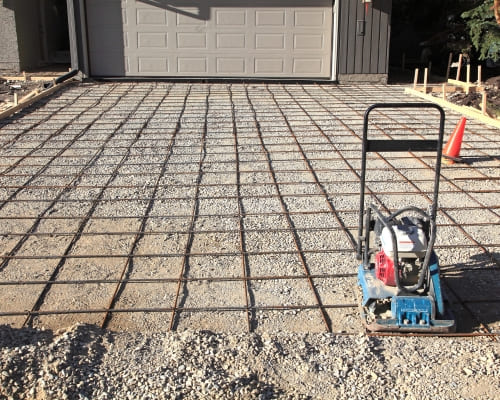
A deck built on inadequate footings will move, and there is no fixing that afterwards without pulling the boards up. We size and dig footings for the actual soil and load, and on the clay through Berwick, Endeavour Hills and Rowville that usually means going deeper than the minimum. We tell you at quoting stage whether your deck crosses the 800 millimetre permit threshold and what the permit and any engineering will add, because a deck built without one becomes a problem at sale. Because MG Landscaping builds the surrounding yard, the deck height is set against the finished paving and garden levels rather than guessed, and the step down onto the lawn lands where it should. We also build the pergola, screening and steps at the same time rather than sending you to a second trade. MG Landscaping operates under ABN 98 441 884 074 and carries public liability insurance. Call 0423 422 866.
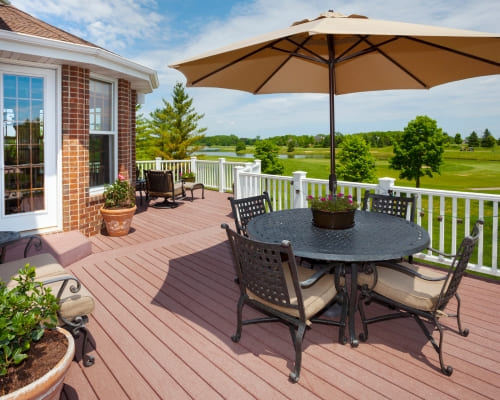
MG Landscaping
What a Deck Costs Per Square Metre
Decking is priced per square metre of deck area, built and finished. Treated pine averages $250 to $350 per square metre, merbau $350 to $500, spotted gum and blackbutt $450 to $650, and composite $500 to $750 depending on the board range. Those figures cover footings, frame, boards and fixings on a low-level deck with reasonable access. For a worked example, a 30 square metre merbau deck averages $11,000 to $15,000, and a 40 square metre deck $14,000 to $20,000 in the same timber. What pushes a deck above those ranges is height: once you are elevated, you are paying for taller stumps and bracing, stairs, and balustrade, and balustrade alone commonly adds $250 to $450 per linear metre. A building permit and engineering, where required, adds an average of $1,500 to $3,500. Screening, privacy panels and integrated seating are quoted separately. Every job is unique, so these are averages rather than quotes and you get a written fixed figure before any work starts.
MG Landscaping
Merbau, Spotted Gum or Composite?
Merbau is the value pick and the one we build most: hard, stable, widely available, and averaging $350 to $500 per square metre installed. It needs oiling roughly once a year to hold its colour, and if you skip that it silvers off to grey, which some people actually prefer. Spotted gum and blackbutt cost more and give you a harder, more characterful board, and blackbutt is the choice where a bushfire rating is a consideration on the ranges edge. Composite costs the most upfront and then costs you nothing in time: no oiling, no sanding, just a wash a couple of times a year, and it does not splinter, which matters around pools and small children. Its downsides are honest ones - it gets hotter than timber in direct summer sun, and a scratch cannot be sanded out the way it can in hardwood. Our steer is merbau if you are happy to oil it annually, composite if you are not, and spotted gum or blackbutt when the deck is the centrepiece of the yard and the budget allows.
Related Concreting Services
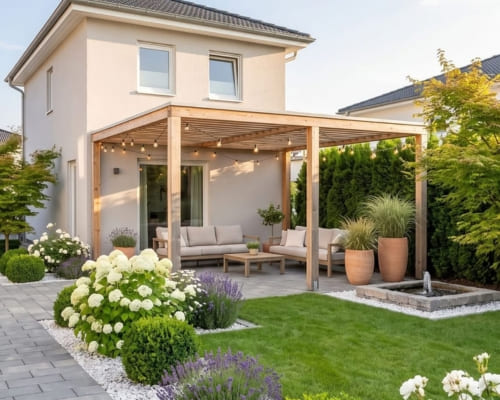
Timber and steel pergolas built to suit your house and your levels, open-slat through to insulated Colorbond roofs. Footings, flashing, guttering and permit checks all handled as part of the build, not left to you.
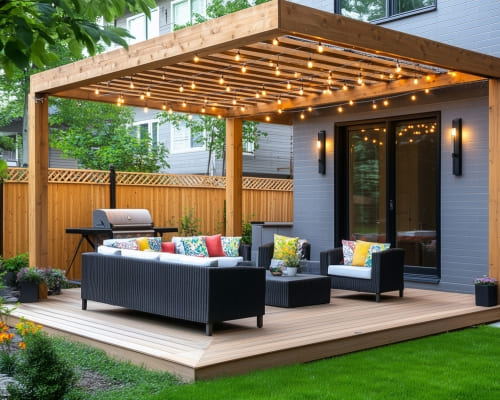
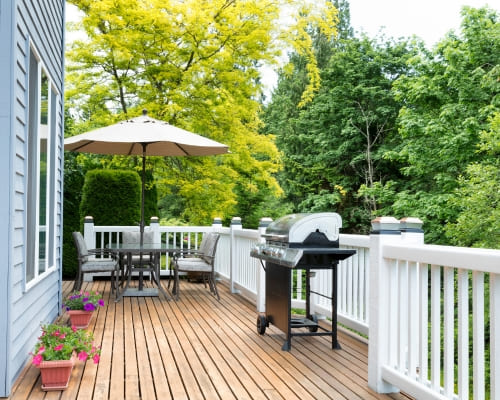
Timber and composite decks built on properly footed frames across Springvale and south-east Melbourne. Merbau, spotted gum, blackbutt and composite boards, with permits, stairs, balustrade and privacy screening all handled as part of the one build.
TESTIMONIALS
What Our Decking Customers Say About Us
The Process
3 Step Process For Your Decking Needs

Site Visit
We come out, measure the space, check the levels and drainage, and talk through what you actually want the yard to do.

Fixed Quote
You get a written quote listing materials, finishes and a start date. Nothing changes without your say-so, and there are no surprise extras.

We Build
Our team prepares the site properly, builds it, then cleans up and walks you through the finished work before we leave.
Decking In Springvale
FREQUENTLY ASKED QUESTIONS
Everything you need to know about our Decking In Springvale
Which timber is best for decking?
For most Melbourne backyards, merbau is the best balance of hardness, stability, availability and price, averaging $350 to $500 per square metre installed. Spotted gum and blackbutt are harder and more attractive but cost more, and blackbutt has a bushfire resistance rating that matters on the ranges edge around Ferntree Gully and Lysterfield. Treated pine is the cheapest and is fine for low service decks but marks easily. If you would rather not oil a deck every year, composite is the honest answer even though it costs more upfront. Every job is unique, so we confirm the figure in writing after measuring.
How much does a 40 square metre deck cost?
In merbau, a 40 square metre low-level deck averages $14,000 to $20,000 built. In treated pine it averages $10,000 to $14,000, and in composite $20,000 to $30,000. Those are for decks close to ground level with reasonable access. If the deck is elevated, expect more for taller stumps and bracing, stairs and balustrade, with balustrade alone adding roughly $250 to $450 per linear metre. A building permit and engineering, where the deck exceeds 800 millimetres in height, adds an average of $1,500 to $3,500. Every job is unique, so you get a written fixed figure before any work starts.
What is the cheapest decking?
Treated pine, averaging roughly $250 to $350 per square metre installed, is the cheapest built deck. It is a genuine option for a low platform, a service area or a deck that will be painted, but it is softer than hardwood, dents and marks more readily, and it needs painting or staining rather than oiling. The saving against merbau averages $100 to $150 per square metre, which on a 30 square metre deck is $3,000 to $4,500. For a deck that will be the main outdoor living area of the house, most people find that difference worth paying. Every job is unique, so the written quote is the number that counts.
Do I need a permit to build a deck in Victoria?
Generally yes once the deck's finished floor level sits more than 800 millimetres above the ground beneath it. A balustrade also becomes mandatory where the drop reaches one metre. Low-level decks sitting close to ground level usually do not require a permit, though setbacks and site coverage can still come into it depending on your council. We check this before quoting and tell you what applies to your address and what the permit and engineering will add. An unpermitted elevated deck is a problem that surfaces at sale time.
How often does a timber deck need oiling?
Roughly once a year for merbau and other hardwoods, ideally in autumn before the wet, and more often on a deck in full northern sun. New merbau should be left to weather for a few weeks first so the tannin washes out before the first coat, unless we have pre-oiled the boards. If you skip oiling, the deck will not fail structurally, it will simply silver off to a soft grey, which plenty of people like. Composite decks need no oiling at all, just a wash a couple of times a year.
How long does it take to build a deck?
A straightforward low-level deck of 20 to 40 square metres is usually five to eight days on site, including footings, frame and boards. Footing concrete needs to cure before the frame is loaded, so that stage is not rushed. Elevated decks with stairs, balustrade and screening commonly run two to three weeks. Where a building permit is required, allow several weeks before we start on site for engineering and approval, which is why we raise it at quoting stage rather than after you have committed.
Request A Free Decking Quote
GET A FREE QUOTE

BUSINESS
SERVICES
SERVICE AREAS
OPERATING HOURS
Sun: 7:00am - 9:00pm
Mon: 7:00am - 9:00pm
Tue: 7:00am - 9:00pm
Wed: 7:00am - 9:00pm
Thu: 7:00am - 9:00pm
Fri: 7:00am - 9:00pm
Sat: 7:00am - 9:00pm